Book at booth 354 →

Home / Events / WorkBoat 2026

International WorkBoat Show 2026 · New Orleans

Digital twins that bring operational data to life

A reading only helps when people understand it. In our training twins, pressure, flow, vibration and temperature appear on the machine they come from, so crews can see what is happening inside and practise the response before they step aboard. Built on simulated data; no headset needed.

2–4 Dec 2026 Booth 354 Morial Convention Center, New Orleans, Louisiana

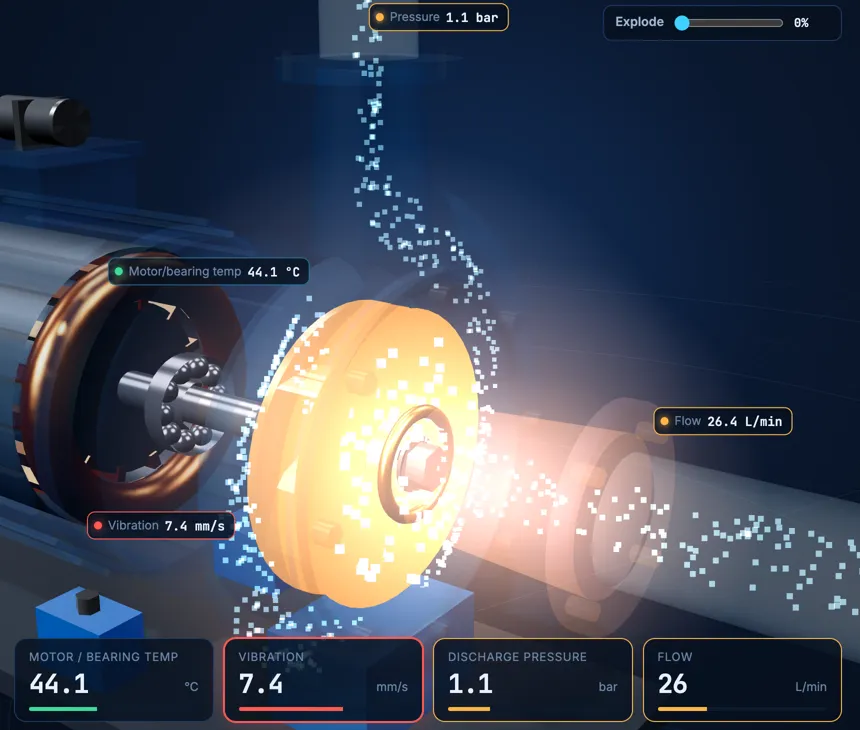
Pump digital twin in a fault scenario: pressure, flow, vibration and temperature labels sit on the parts they describe, and the impeller glows
CloudIngest pump digital twin, fault scenario running. Simulated data; the readings move as it runs.

Operational data, brought to life

How AI and XR help the maritime industry

Vessels already produce more readings than a crew can watch. Together, three layers turn those readings into something a crew can understand and act on.

  1. AIFind the signalCondition monitoring and AI are good at spotting patterns in equipment data: a pump starting to cavitate, a bearing running warm, a battery cell drifting from its neighbours.
  2. Digital twinShow it on the machineA digital twin puts each reading on the part it describes, so an alarm becomes a picture that anyone on board can understand, not just the engineer who knows the system.
  3. XRPractise the responseIn the browser, AR or VR, crews rehearse the diagnosis and the procedure on a virtual machine first, with nothing at risk and no vessel taken out of service.
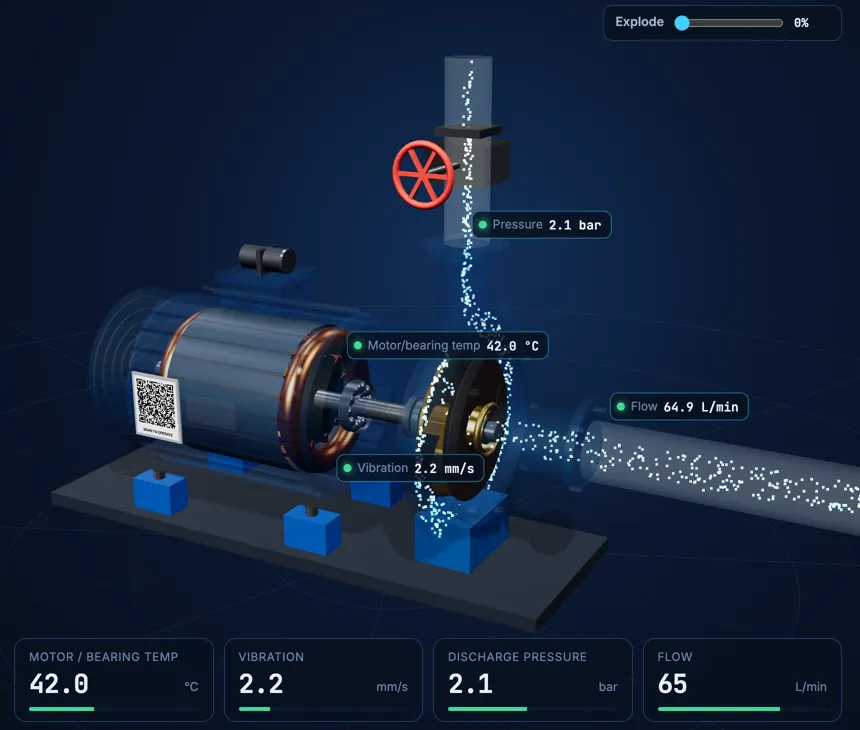
Pump and motor digital twin running normally, with pressure, flow, temperature and vibration labels on the parts they come from
Each reading sits on the part it comes from. Simulated data.

At booth 354 we show the digital twin and XR training layers, running on simulated data and rule-based faults. Connecting a twin to live vessel data or to your monitoring system is a separate integration project we can scope with you.

The three-minute challenge

A running pump loses flow. What is failing?

Centrifugal pumps move cooling water, ballast and bilge water on most workboats. In this simulated scenario the readings will not settle and the pump sounds like it is pumping gravel. Make the call.

Discharge pressure1.1bar healthy run: 2.1 bar
Flow25L/min healthy run: 65 L/min
Vibration7.5mm/s healthy run: 2.2 mm/s
Motor / bearing temp44°C healthy run: 42 °C

Your diagnosis

Show the answer

Right. Vapour bubbles form in the low-pressure eye of the impeller and collapse violently. Pressure and flow go unstable, vibration jumps, and the pump sounds like it is pumping gravel. The usual cause is a starved suction side: a blocked strainer, a low tank or too much lift.

Simulation only. OEM instructions and vessel procedures govern real equipment.

Want the full 3D version now? Play the 3D pump demo: break the pump, watch the fault happen, then find a hidden one. At booth 354 you continue in the full twin, with troubleshooting and the lockout steps.

What you can try at booth 354

Two digital twins, built for training

Both run in a browser and open in AR or VR where that helps. Both run on simulated data and rule-based faults; neither is connected to a live asset.

Pump and motor digital twin running normally, with simulated pressure, flow and vibration readings

Centrifugal pump and motor, the kind found across the engine room

Pump and motor twin

  • 17 named parts, from the impeller and wear ring to the mechanical seal
  • Eight fault scenarios, including cavitation, bearing wear and dry running
  • Troubleshooting from symptom to failed part, then lockout and isolation steps
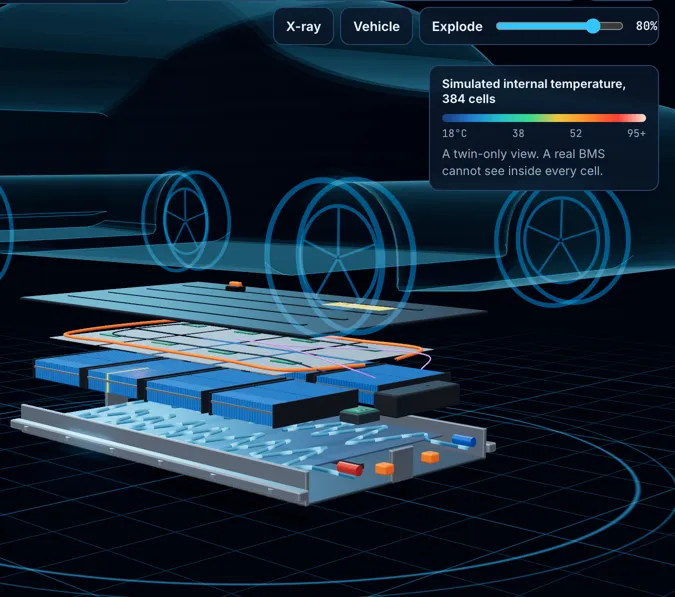
Battery pack digital twin, exploded view of modules and cooling plate with a simulated temperature scale

A starting point for hybrid and electric vessel training

EV battery twin

  • A 384-cell EV pack with a simulated battery management system
  • Eight hidden-fault cases: diagnose from BMS evidence alone
  • Thermal propagation: see how heat from one failing cell spreads through a pack

More to try in your browser: all our browser demos, including step-by-step assembly training.

Who we would like to meet

Built for the people who keep workboats running

If your people need to understand a system before they touch it, a few minutes at the booth will show whether a digital twin fits.

Vessel owners and operators

Towing, offshore, ferry and passenger fleets bringing crews up to speed on new equipment and rare faults.

Shipyards and repair yards

New hires who need to learn a system and its procedure before they work on the vessel.

Marine equipment makers

Engines, pumps, propulsion and battery systems shown inside out in 3D, for buyers and for service technicians.

Maritime academies and training centres

Hands-on practice in the browser or a headset, added to the courses you already run.

From demo to your vessel

A pilot starts with one system

We do not ask you to buy a platform first. Start with one system your crews already find hard to troubleshoot, and use the pilot to see how they diagnose faults and follow your procedure.

  1. Pick one system and one procedureA cooling-water pump, a generator or a battery room, and the procedure your crew already follows.
  2. We build the fault scenariosA few faults on that system, reviewed with your chief engineer or subject-matter expert.
  3. Run it with your crewIn the browser, with a record of how each person diagnosed and acted.

WorkBoat 2026 · 2–4 Dec 2026

Book 15 minutes in New Orleans

Tell us which day suits you and what you would like to look at. We confirm the time at booth 354 by email before the show.

  • The three-minute challenge, then a conversation about your equipment
  • Engineers who build the twins, not a sales deck
  • An honest answer on whether a pilot fits

Prefer email or phone? info@cloudingest.com · +1 470-222-4805

WorkBoat 2026 meeting

We use this only to reply to you. See our privacy notice.

Questions

Before you book

What is CloudIngest showing at WorkBoat 2026?
Two browser-based digital twin training simulations on simulated data: a centrifugal pump and motor with fault scenarios, troubleshooting and lockout steps, and an EV battery pack with a hidden-fault challenge. Find us at booth 354 at the Morial Convention Center, New Orleans, from 2 to 4 December 2026.
Is the data in the demo from a real vessel?
No. The demos run on simulated data and rule-based faults, built for training. They are not connected to a live asset and make no failure predictions. Connecting a twin to live vessel data or to the monitoring you already run is a separate integration project we can scope with you.
Where do AI and XR fit?
AI and condition monitoring help find patterns in equipment data. The digital twin shows what a reading means on the machine itself, and XR lets the crew practise the response. Our booth demos cover the twin and the XR training.
Do crews need a VR headset?
No. The training runs in a desktop or tablet browser. The same twin can also open in AR on a phone or tablet, or in VR on a headset, where that helps.
Can you build this for our vessels or equipment?
Yes. A pilot starts with one system and one procedure you already use, such as a cooling-water pump, a generator or a battery room. We build a few fault scenarios on it, run them with a group of your crew and report how each person diagnosed and acted.
How do we meet you at WorkBoat?
Find us at booth 354 at the Morial Convention Center in New Orleans. Book a time with the form on this page and we confirm it by email before the show. A first meeting takes about 15 minutes, including the three-minute challenge.